I was in middle school in the 1980s. At this time ‘shop’ or ‘industrial arts’ was still being taught with wood, bandsaws, glue and sandpaper. During my high school years things began to change in the ‘vocational’ teaching world. Computers were growing in popularity and had become more affordable. I distinctly remember sitting in front of the green tinted screens typing in measurements and coordinates to create 2 dimensional drawings on an early version of AutoCAD. Wow! How far we have come in 30 years! In high school I did the minimum to get by. I didn’t push or challenge myself very much. It just wasn’t that interesting to me. The only exception to this rule was during my “Tech Ed” classes. My teacher, Coach Vander Velde, challenged me to inquire and question traditional ways of thinking.
After graduation, I pursued a B.F.A. degree in TV and Radio Production. After college I was hired to work at a local TV studio. I started working the ‘graveyard’ shift which involved taping satellite feeds, organizing broadcast files and so on. I was making a bit more than the minimum wage. I asked myself, “Did I really go to college to just make a bit more than minimum wage?” An opportunity presented itself to me in the form of a Masters degree in Technological Studies. This degree gave me the skills I needed to teach ‘vocational’ classes in middle and high school. I completed my student teaching and started a job in an urban high school near Atlanta, Georgia.
I enjoyed teaching during my first year of teaching, but one afternoon, during my drive home, I heard an advertisement on the public radio station for teaching English in China. Being that this was over 20 years ago, China was in the process of opening up to the rest of the world. I contacted the company and the following August I was headed to China for the first of many times since! I taught at a university in Beijing for one year. That year I traveled all over China and caught the ‘travel bug’. After a two year stint back in the USA, I returned to China where I eventually landed in an international school and was introduced to the International Baccalaureate curriculum. I taught ESL and ‘MYP Technology’. I realized then that teaching IB was a natural complement to the ‘inquiry-based’ teaching approach of vocational education.
I have taught in several IB schools since then. In all of these schools I have been involved in ‘Design’ teaching and planning. One thing that I have noticed about young people is that whether I am teaching woodworking or 3D printing, students love to be hands-on! Additionally, careers have changed so much over the past 20 years that teaching student ‘technology-related’ content is outdated. As teachers we all need to be teaching inquiry-based critical thinking and problem-solving skills. The subject of “Design” is the perfect crossroads for all of these things to be taught, practiced and mastered. In the school where I currently work, the students are able to experience robotics, podcasting, filmmaking, 3D printing, digital photography, graphics design, digital illustration, architectural design, fashion design, laser cutting/engraving, website design, coding and programming, drone operation, electronic music production and so on! All of this is within the Design curriculum.
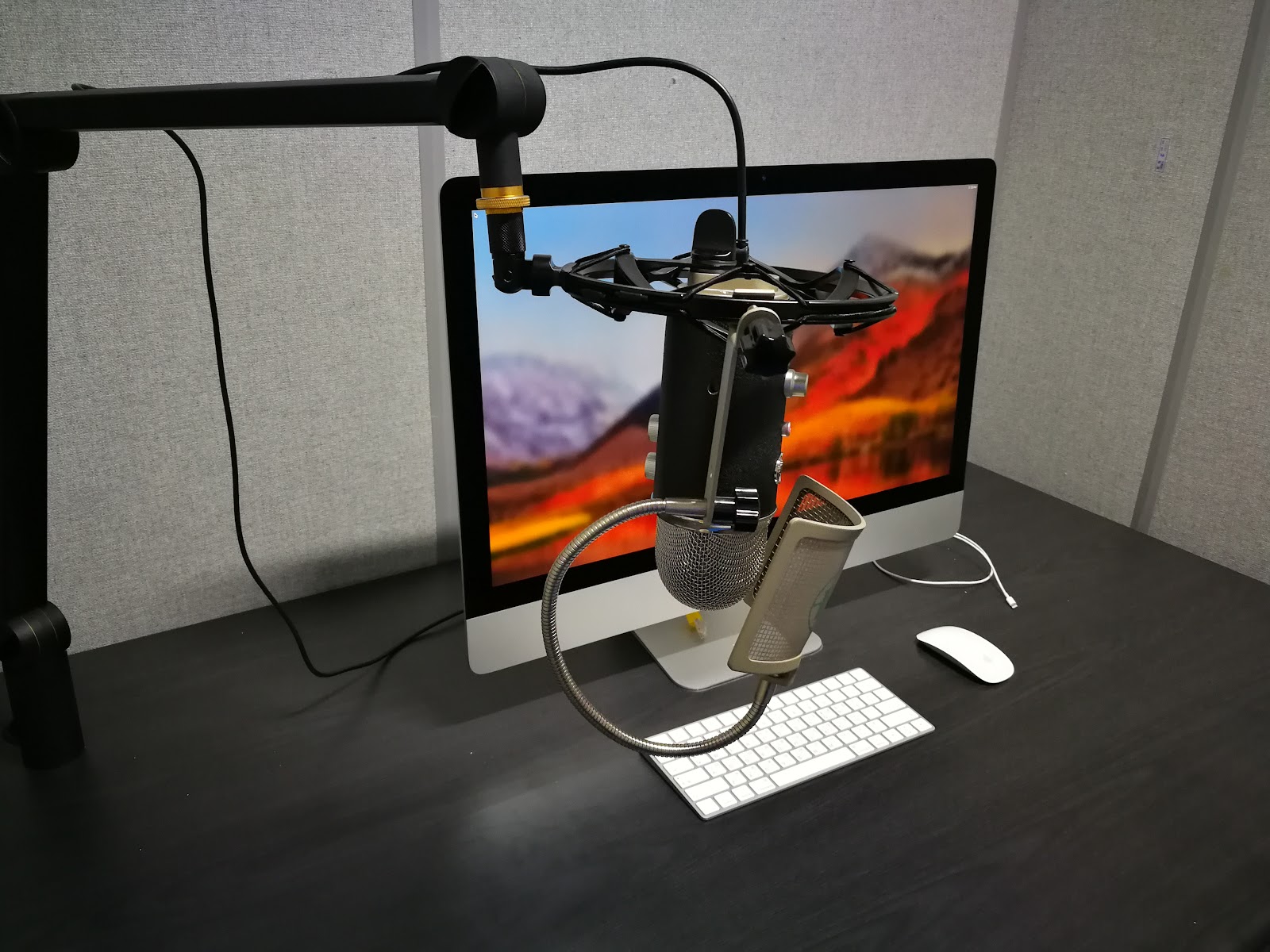
One of our soundproof recording booths
Drone photo of the campus
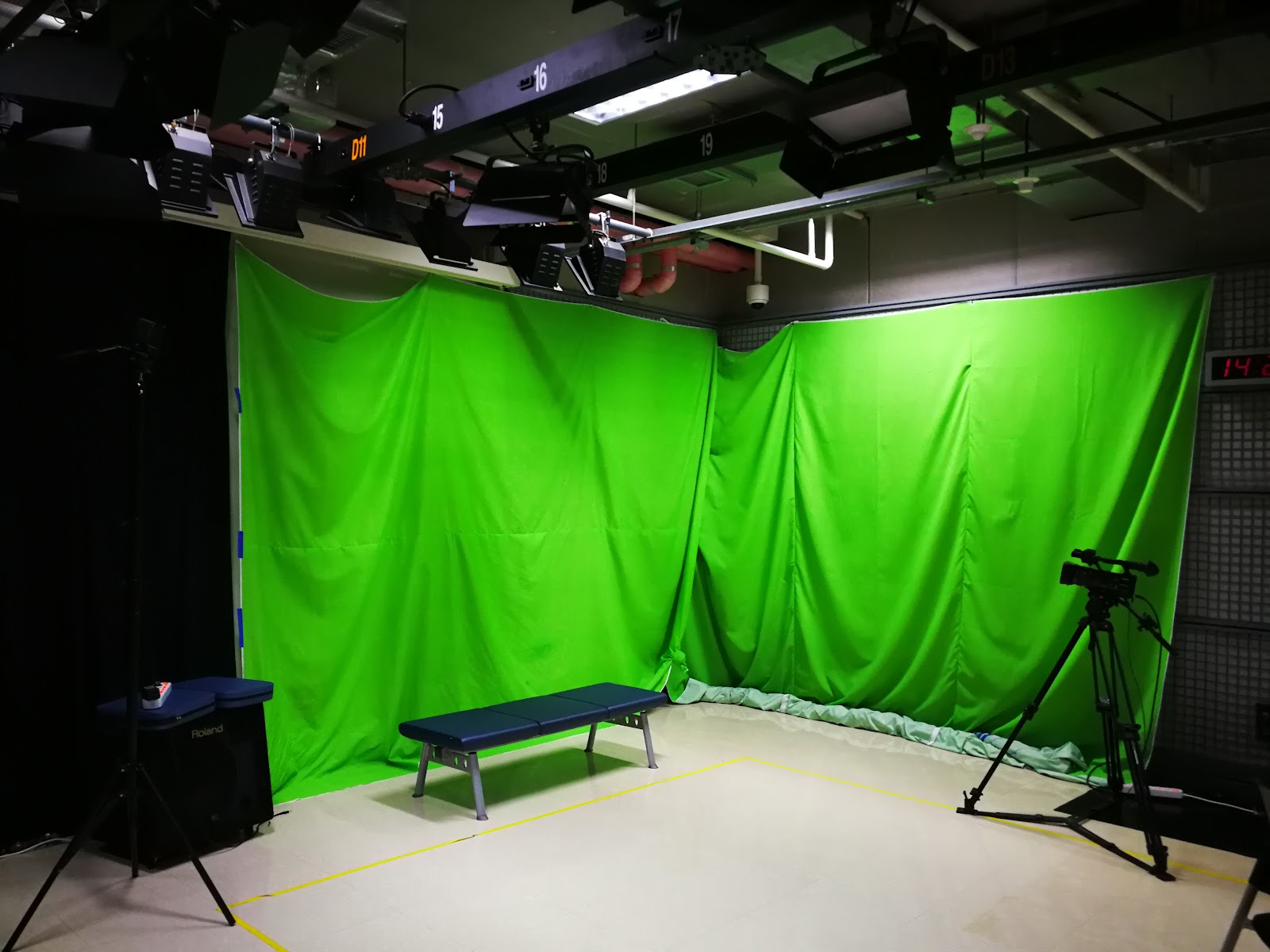
Inside the school TV studio
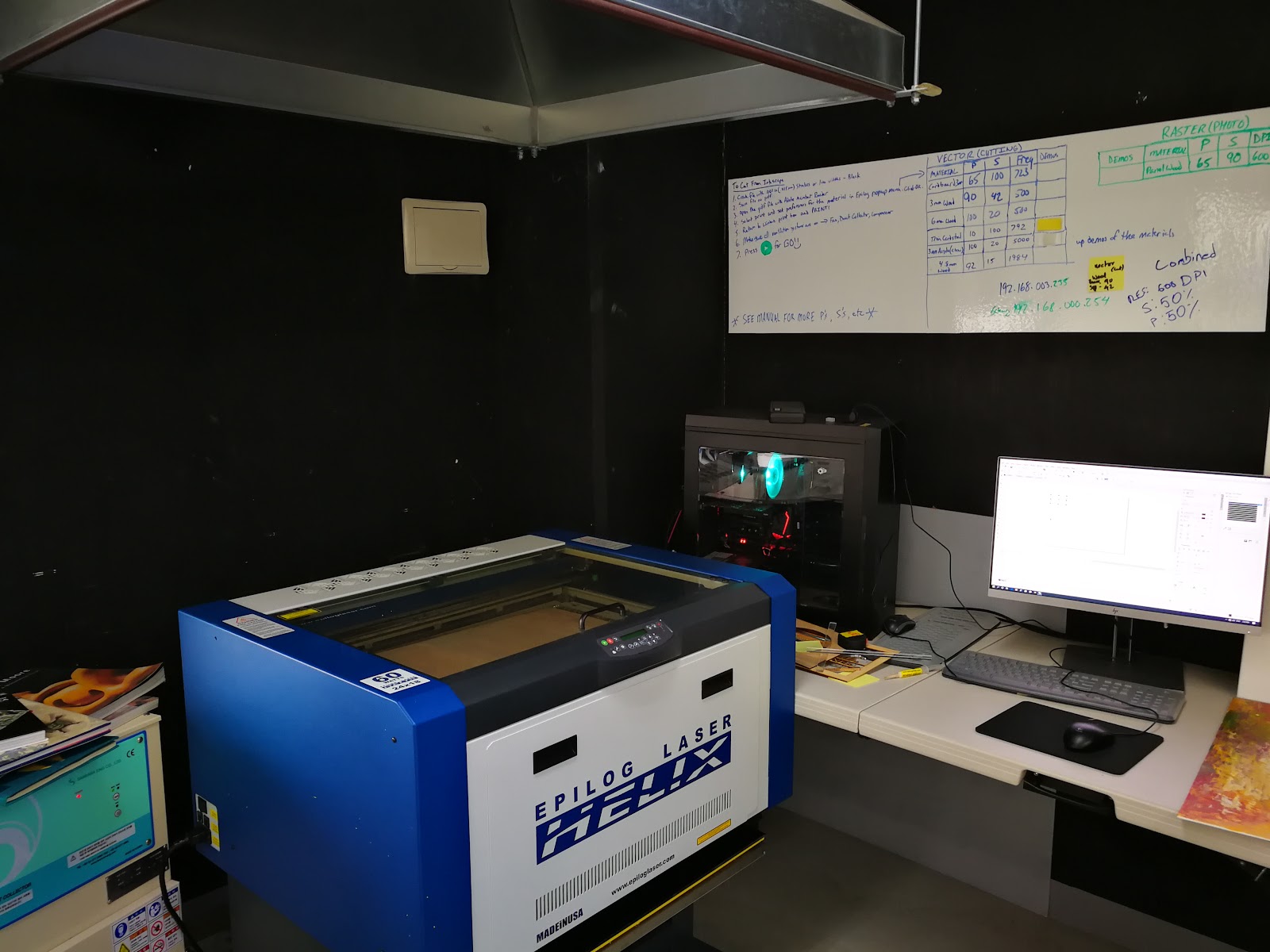
The laser cutter
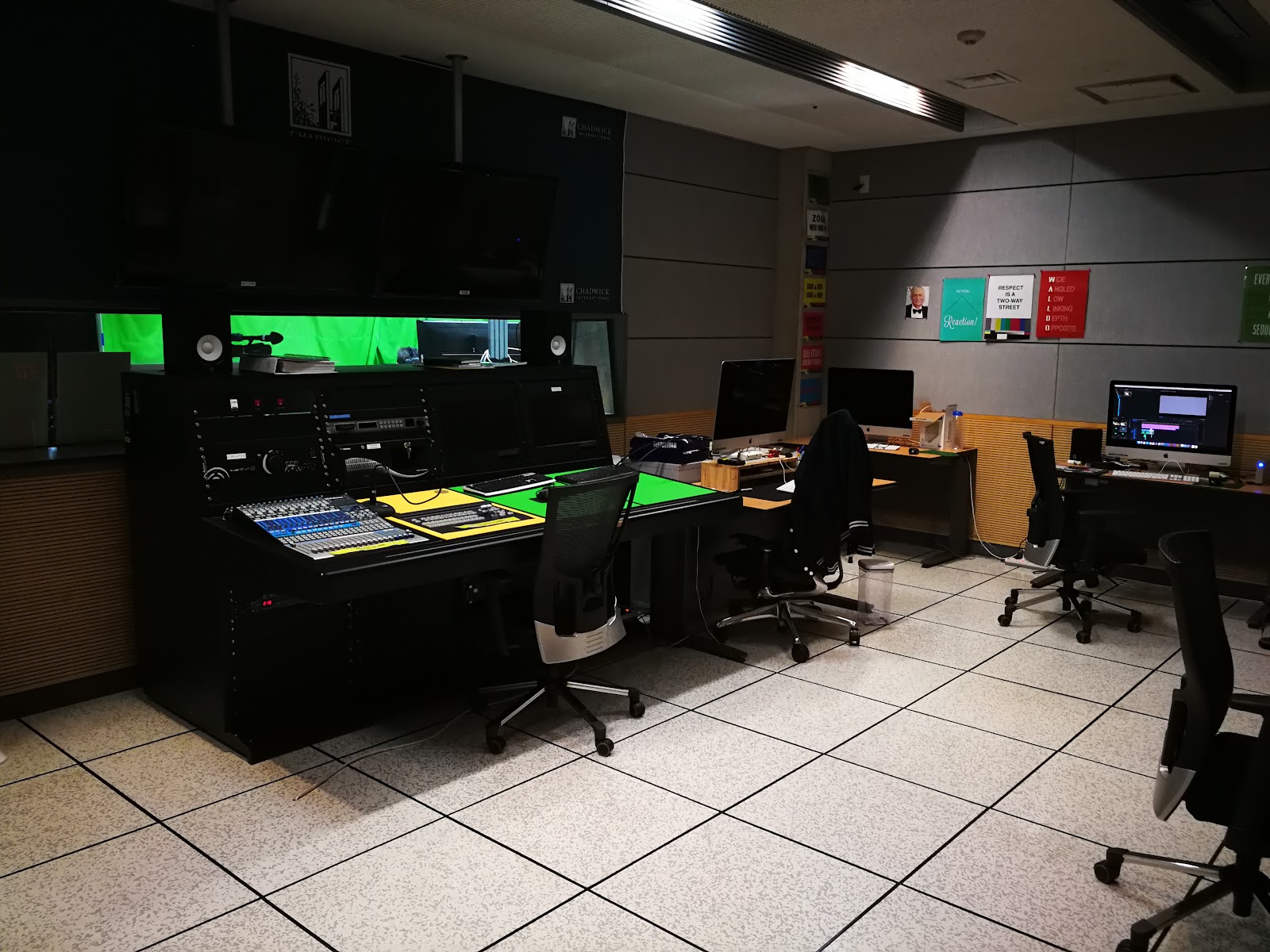
TV studio control room
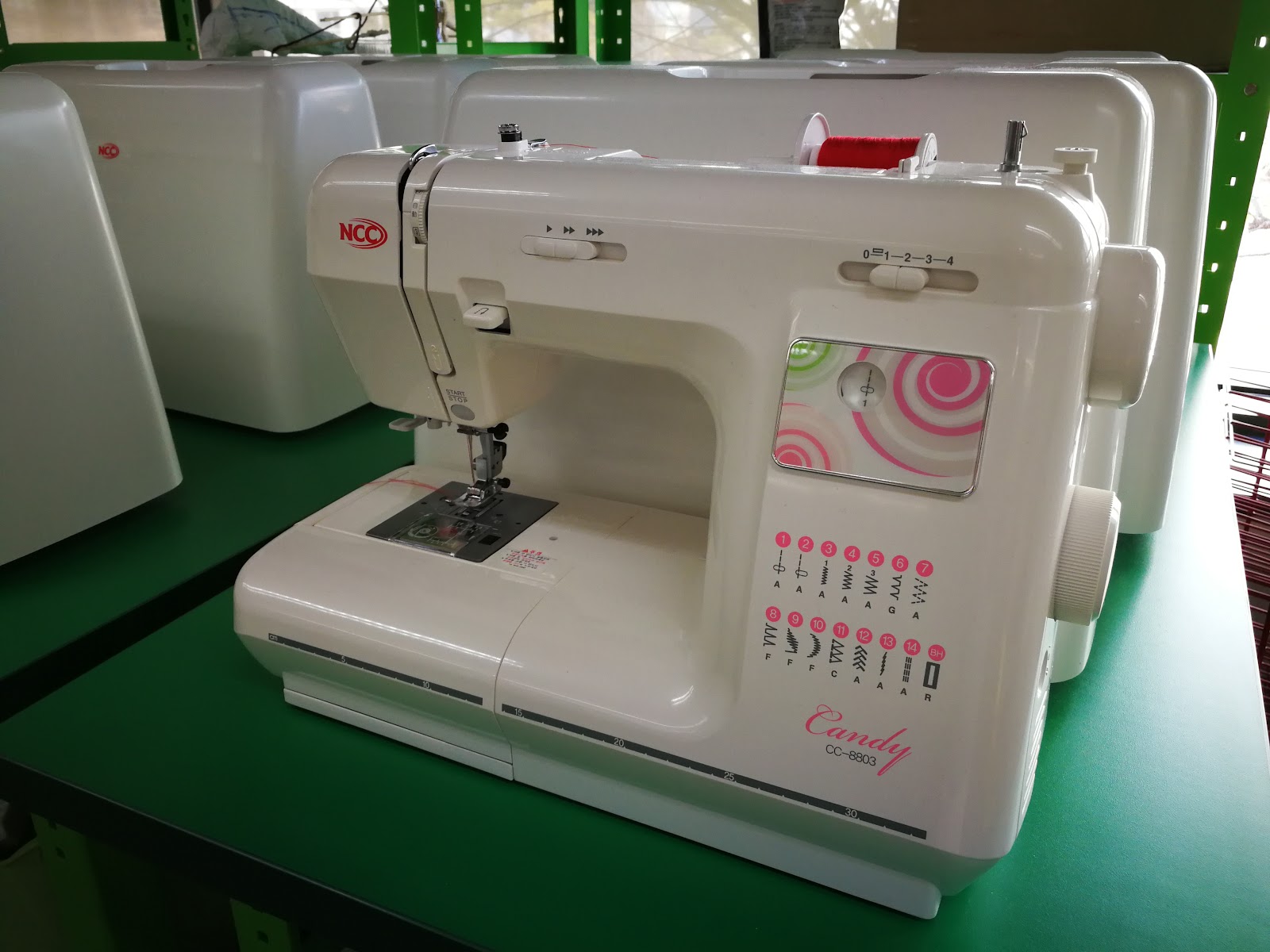
One of the many sewing machines
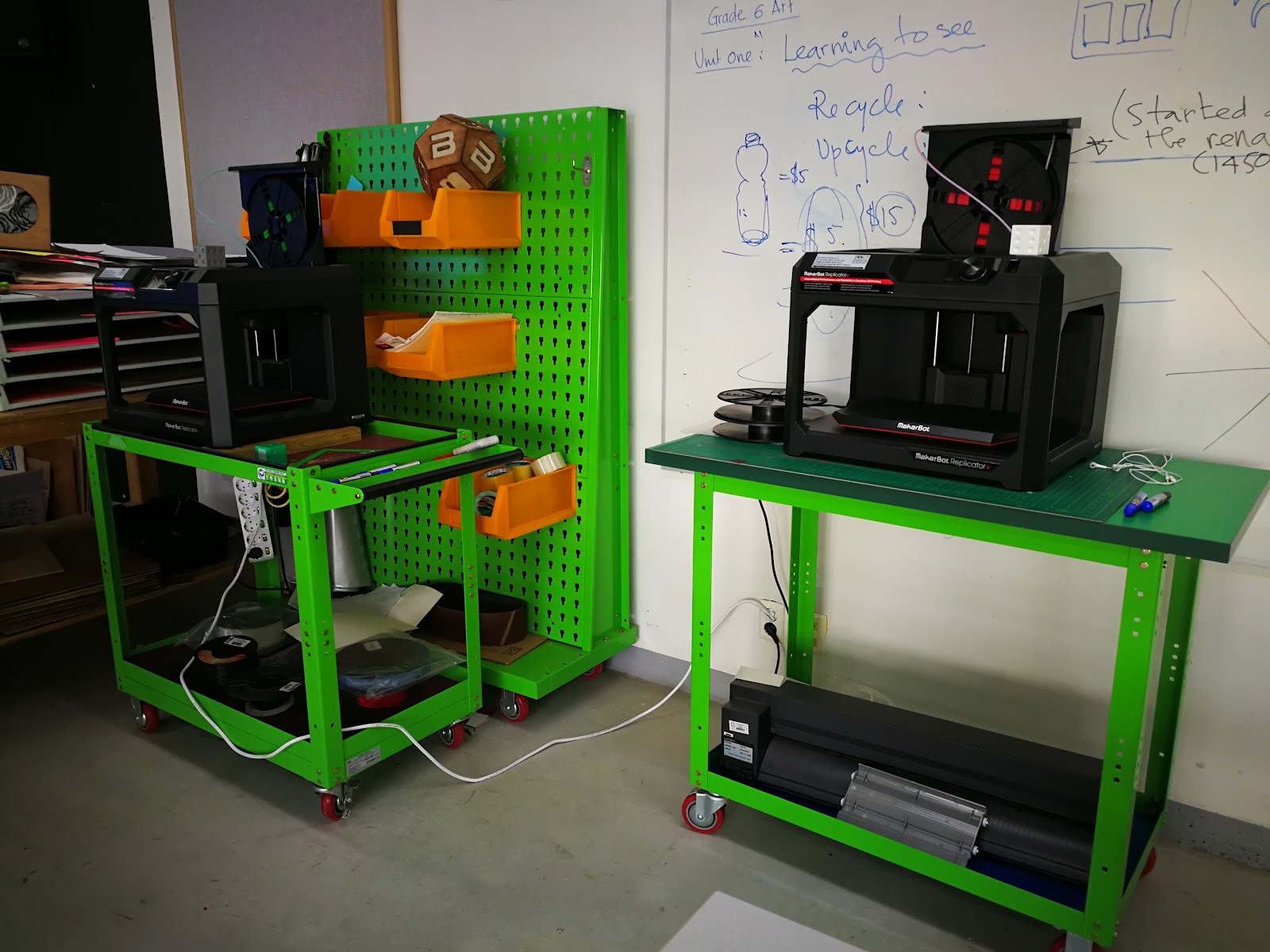
A couple of the 3D printers
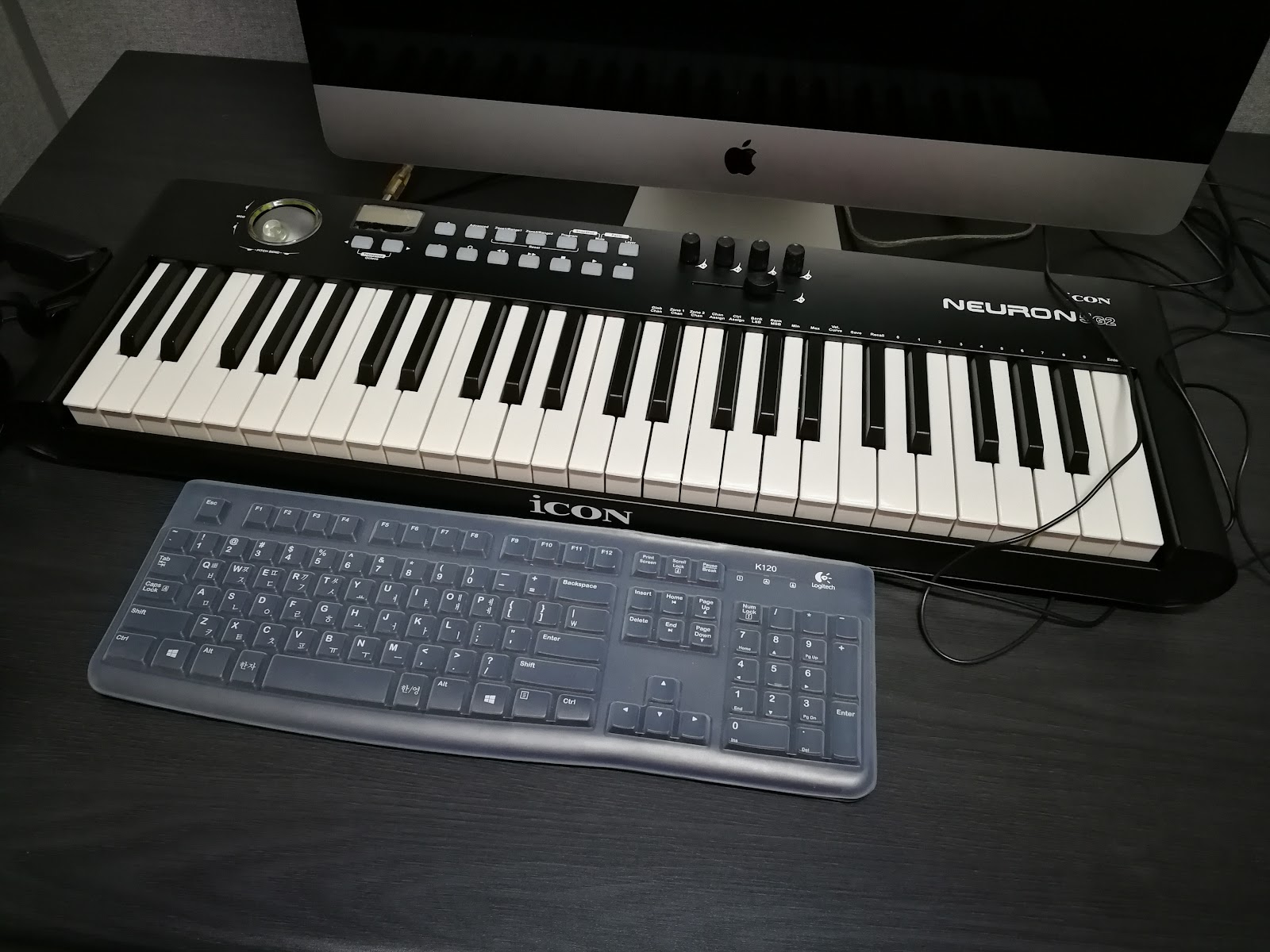
Midi keyboard for making original music
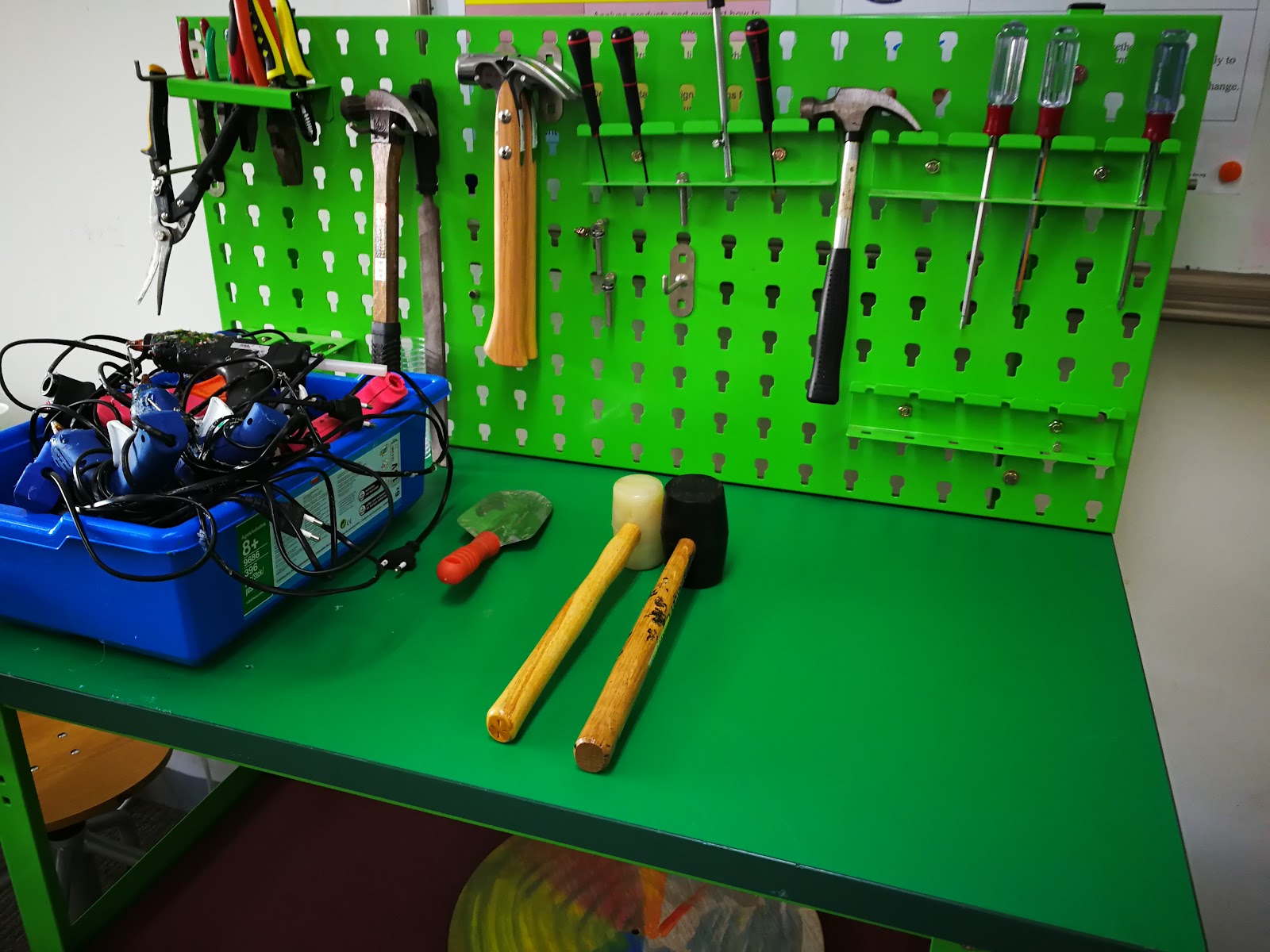
One of our small tool benches
An average day…
On any given day I will teach between 20-50 students depending on the schedule. Students will be in various stages of development working towards a completed design project. All of our projects start with an investigation or inquiry into some sort of issue, situation or problem. This should include an account of some sort of interaction with the client or target audience for the project. The students will continue to follow the Design Cycle and provide evidence of their work throughout. Most of my day involves checking on equipment, supplies, and so on. I have informal conversations with the other members of the department to see if everyone has the materials and access to the spaces that they need. Currently, the members of the Design department are content experts in programming, podcasting, filmmaking, photography, materials processing, Computer Aided Design (CAD), and textiles, just to name a few.
How to get involved…
If a teacher has some experience with similar disciplines and wants to get involved in an international school teaching ‘Design’, then I would highly suggest doing it! Make a list of your priorities, regions you would like to live and work in, salary range, among other things. It is ok to target schools that you are interested in as Design teachers are often difficult to find. Whether the school uses IB, AP, Cambridge, or something else, there is always a ‘design’ equivalent course that can be taught!
Giving back to the professional community…
Since 2008, I have been part of the IB Educator Network or IBEN. This means that I have conducted school visits, served as a consultant to candidate schools, lead subject-specific workshops, and other various IB related events. This involvement outside of school has been a key part in my professional development. I have met hundreds of like-minded educators that I am in regular contact with and we share best practices/project ideas with each other. This keeps my own teaching exciting and relevant to my students.
—
Jason Reagin is currently the IB Career-related Programme Coordinator and Department Chair of Design & Visual Arts at Chadwick International School in Incheon, South Korea. He taught in the US, Bermuda and China prior to coming to South Korea. Jason’s passions include being a live-long learner, coffee drinker and a cinephile. He has experience in curriculum leadership and development in several different school ecosystems. Connect with him on Twitter @diskon4no
Around the world, there are countries (like Albania) that have more than one international school. Many times there is an American school, a British School, and an international school that uses an international curriculum.
The big question always is…how do the comments about each school compare to each other?
This blog series looks at comparing some of these comments, all coming from international schools in the same country.
Albania
Currently, we have 6 schools listed in Albania on International School Community.
4 of these schools have had comments submitted on them. Here are some that have the most submitted comments:
“You can save around 1000 to 1500 Euros each month depending on your lifestyle. Traveling around the region is quite tempting, so you will have to prioritize if you really want to save some money or explore the world…” – Albanian College Durres
“Extremely easy to save money. Restaurants and local hotels are not expensive…” – World Academy of Tirana
School Campus
“In south of city, owner just bought a field in front of school for student play…” – Albanian College Tirana
“The school has serious safety concerns. The railings could easily fit a small child through them. The ceilings on the main floor have collapsed. There is a pool in the basement without proper ventilation. The only outdoor space for the children to play is on the roof and it is woefully inadequate…” – Albanian College Durres
“The school moved to its current 4-storey building in 2015, with a purpose-built Science Laboratory, Design workshop, Permaculture Garden, multi-functional Sports Court, Gymnasium, Visual Arts studio, Dance Studio, Music Studio, two Libraries, Cafeteria and Bistro…” – World Academy of Tirana
Housing Information
“Housing is provided by the school. Value is 300E per month. Staff pays their own utilities, cable, internet, etc…” – World Academy of Tirana
“Housing allowance ranges from 300-400 Euro’s per month depending on single status and number of dependents…” – Albanian College Durres
Sample prices for food, transportation, average hourly rates for a housekeeper, etc.
“Prices much lower than surrounding countries…beer in local restaurants range from 1.2 E to 2.5 euros…” – World Academy of Tirana
“To take a taxi from within the center of the city, it will cost you around 350-450 LEK. Quite cheap! Going out for food will probably cost you around 1600-1700 LEK for two people, and that includes a few drinks and appetizers…” – Albanian International School
“Housekeepers prices vary. Some expats pay 10,000 Leke per month for a housekeeper visit 2 per week…” – Albanian College Tirana
(These are just 4 of the 66 different comments topics that are on each school profile page on our website.)
If you work at an international school in Albania, share what you know. Consider becoming a Mayor for unlimited free premium membership!
We all seem to know somebody in the international school community that is being affected by the health scare in Asia connected to the Coronavirus.
But how are those international schools coping with this situation? What are the teachers’ responsibilities? Where are the teachers doing the online teaching? Which technologies are they using? What is the overall feeling of the situation from all stakeholders? How was the organization of it all?
Here are four stories from four different teachers at international schools in China and Vietnam:
International School of Tianjin
In the days leading up to the Chinese New Year break, there was awareness and increasing concern about the new virus in China. A lot of masks were being worn at school and some students were talking about it with a degree of concern. The virus quickly became a national issue and by the third day of the break, on January 28, we were told that school would be closed until at least February 17. During the holiday week our school let us know that we would be implementing an online learning structure. Leadership teams met and outlined what this would look like in order to continue to provide a rigorous curriculum but not overwhelm the students and parents. In elementary school our primary platform is Seesaw, which the students had already been using all year. We are maintaining the daily schedule as much as possible (i.e. if your class has PE on Monday, the PE teacher would send an assignment on Seesaw that day). Homeroom teachers are expected to send out a morning message with daily assignments by 9:00 each day and be available for the entire work day providing feedback to students. The secondary school is following a similar model using Microsoft Teams and Managebac to share content and assignments.
It has been more work than everyone anticipated, but it has also been nice to be able to connect with students. As parents we are also working with our own children and it has been good to create some structure in their day as the time away from school stretches on. The situation is ongoing. We are far from Wuhan, but there have been a number of cases reported in our city. There is not a formal quarantine but movement is very limited and we are under a lot of pressure to stay indoors at all times. The police are outside taking temperatures and collecting information. As of right now it is likely that the school will stay closed for several more weeks and there is a lot of uncertainty. We are hoping for a resolution of some kind to this crisis and we look forward to getting back to the familiar routines of a normal school day.
American International School in Shanghai, China
I work at an American International School in Shanghai, China. We received an email about starting E-learning lesson on Feb. 3rd and to contact our administrators if we had questions. The email stated to follow our daily class schedule and post a mini lesson video of no less than 15 minutes for each subject taught. As an EAL teacher in primary for different grades, I’ve had to make reading, writing, phonics, and handwriting videos. The email also had a long list of expectations for teachers such as assignments with deadlines to be uploaded on our grading website, students must work for 30 minutes and give feedback. However, little to no support has been given on the IT side of e-lessons, other than contact your supervisor for questions. Edmodo was the only platform suggested to use where someone could support you with it, but we were told to use any platform we preferred which led to parents getting bombarded with messages to sign up to Edmodo, Seesaw and others. I only chose Seesaw because my collaborating teachers were using it, and I wanted to make it easier for my students’ parents.
The two biggest problems we are facing with our E-lessons is not being allowed to use Google technology due to its restrictions in China and most parents not having a VPN. Second one was how to upload videos of 15 minutes in Wechat when it has a five-minute limit. Our school’s official Wechat group went blasting with messages about condensing videos using different websites, different APPs, and etc. Nothing concrete on these APPs with specific tutorials on how to get set it up in a few days to start running e-learning. These links were all helpful however we needed time for E-training, which we haven’t receive in 3 years that I’ve been working there. Luckily for me, I had received classes on using technology in grad school.
I think my school’s expectations are unrealistic due to parents and teachers being stranded all over the world due to CNY holidays and not having access to reliable internet. I was vacationing in Boracay, so I did my lessons with an IPad and my IPhone. Yes, I am without a laptop making this a headache for me. I also have limited or unreliable internet access. Also, you can’t expect the same teaching as the classroom when not everyone has internet, web knowledge or skills, nor the time to sit through a regular day schedule of videos, which include videos for math, science, reading, writing, Specials subject (art, P.E., etc), and foreign language for K-5. Parents spent a long time setting up accounts, learning how to navigate one, two or three APPs. In all honesty, it was hell for teachers, parents and students. I’ve been working around the clock answering questions from parents.
One parent said it best when he voiced his frustrations “Parents can’t teach children. We are not native speakers nor teachers.” Think about the difficulties one of my student’s parent is facing having to login to different APPS and instructions from all teachers for her three children. Can you imagine the series of videos they have to watch daily for each kid? She is beyond frustrated because she’s in the pharmaceutical industry, so she’s still working during the day and has to come home to help her children.
You see I’m happy to learn as I’m doing e-lessons, but I wish my school was more realistic and practical with their expectations. Although I think handwriting is important, I don’t think under these circumstances we need to have e-lesson. I’ve only been focusing on reading and writing and that’s all I can do for now. That’s all more than enough for parents to handle. They are not trained teachers to assist their kids specially in grades K to 3 where children have a shorter attention span and are not yet independent learners. I can teach in a video, but can students be expect to sit through six videos of 10-15 minutes from all their teachers?
An International School in Ho Chi Minh City
On the Saturday before the school was supposed to open after the Tet (Lunar New Year) holiday, the school sent an email to staff and parents saying they intended to keep the school open during the Coronavirus outbreak, outlining the enhanced health and safety measures the school would implement. Less than an hour later, the Vietnamese government announced that the virus was an epidemic and all the local and international schools decided to close soon after. Such is life when you live in a country where the government is less than transparent – executive decisions seem to come at short notice, and all schools and administrators can do is adapt as best they can.
As teachers, we all know that death, taxes, and faculty meetings are the unchanging staples of life. As such, even though the students are away, we have faculty meetings three days a week. We enter the campus one at a time, as a guard checks our temperature and directs us to a giant bottle of hand sanitizer we must use before entering. We are updated on the situation on the ground and how it affects school. We meet about students of concern – who’s not doing their remote work, who didn’t bother to check their email until Tuesday, etc. We also discuss strategies for remote work. Everyone uses various online platforms and is happy to share success stories and advice. This is the silver lining of the whole situation: while remote learning is a bit dull if you actually enjoy engaging with students as individual human beings, it’s a great opportunity to experiment with different types of learning platforms. I’m using Edpuzzle and Flipgrid for the first time – I’m not sure if I would have the time or inclination to test them in normal circumstances, but I’m happy to test them out in hopes that I can use them again when everything returns to normal.
United World College Changshu China
When I accepted an offer to work in China I was never to expect that something like the outbreak of Corona virus would happen. However, I consider myself to be the virus free, being in self quarantine for the last 12 days without showing any symptom of infection.
As for the next week, I am required to start teaching online. What does it mean in terms of my effectiveness to share knowledge with students in few classes (different subjects, years and levels)? To be honest, the difference in comparison to my usual days when in school is not so significant (in theoretical terms). As since the beginning of this school year, we have been required to explore and use opportunities of digital learning. My usual working day (for the last few days) starts around 9am and I work, both with teachers and students for the next few hours (read, until I start getting that feeling that my brain will explode). I am relying on Microsoft Teams as the school follows the official Chinese politics and does not welcome Google classrooms. The initial stage of working with Microsoft Teams (this is not an advertisement!) may seems confusing as you can create as many Teams (groups and classes) as you want but soon you may realize that you may be overwhelmed with the amount of messages which keep on getting higher. Students are being required to learn about services of Microsoft Teams on their own while teachers have received some support in that. This basically means that in theory I can use any teaching platform which fits to my current needs, but in reality I have to communicate lessons and instructions on Teams and Manage back only. I am also using Wechat for a quick communication with students.
What I am also currently surviving is the feeling of panic as I have students from six different continents in my classroom and I must reach all of them. I am currently planning our virtual timetable and that seems to be the biggest challenge that we are currently facing (as I must offer face to face instructions). For the last 24 hours I was trying to reach students across the globe, to determine their time zones and assure them that they will have enough knowledge and skills to take the final exams.
In terms of strategy, what to do, how to deliver lessons, I can no longer rely on lesson plans being planned for our classroom space as they emphasize the value of activities much. Now I am trying to find text and create written assignments which would force them to read, think, analyze and construct their responses. In terms of what to do for summative assessment, well, as for now, that is science fiction. I am counting on their honesty when doing formative assessment (though I still aim to use Turnitin).
All in all, the sense of panic is still being strong as I don’t fixed timetable and I am rushing to plan lessons for five different teaching programs,. There is a feeling of fear in me too as some of my students are in cities which were locked down more than two weeks ago and their chance for survival depends only on their willingness not to leave their apartments.
To finish this story, I am still learning how to deliver completely effective virtual classes but I have delivered my first teaching instructions already (in the virtual space which reminds to those of countless forums). I am spending much of my time in calling students wherever they are, to assure them that we can go through this situation and that no one of them will be damaged in terms of their knowledge acquisition.